
Global Disaster Cleanup Crew San Jose › Commercial Water Damage Restoration
Commercial Water Damage Restoration in San Jose, CA
San Jose's climate creates predictable water damage windows — storm seasons, freeze cycles, hurricane periods, atmospheric river events, monsoon flash floods. Our crews stage equipment, dispatchers, and technicians ahead of major weather events so we can respond before damage compounds. When conditions hit and your property takes on water, the difference between a $3,000 cleanup and a $30,000 reconstruction often comes down to how fast extraction starts.
⚡ within 60 minutes anywhere in the San Jose metro and Santa Clara County, accounting for Highway 101, 280, and 87 corridor traffic patterns
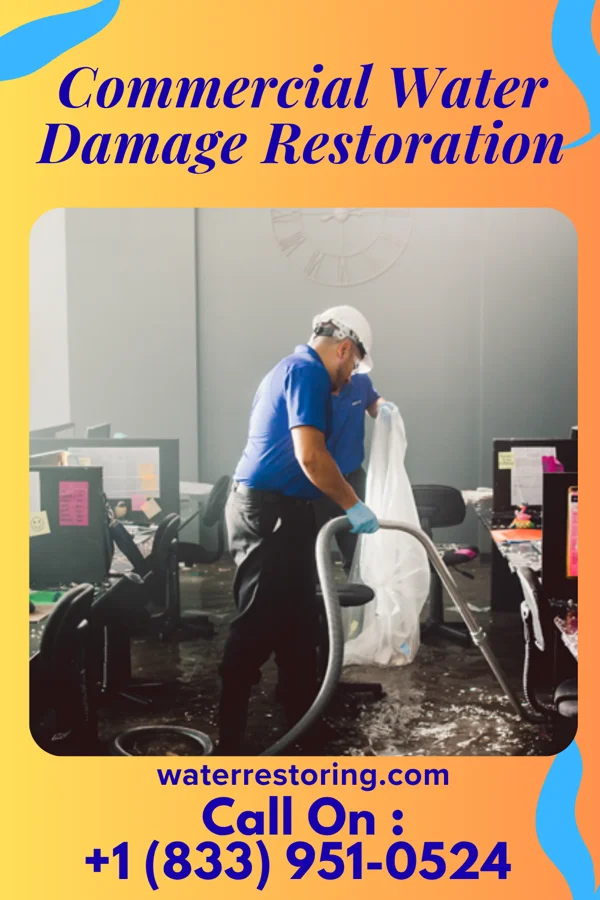
📞 Call +1 (833) 951-0524Commercial water damage restoration in San Jose requires more than a wet vacuum and a few fans. Professional restoration uses truck-mounted vacuum extractors that pull thousands of gallons per hour, calibrated low-grain refrigerant dehumidifiers, axial and centrifugal air movers placed according to IICRC drying chamber math, and continuous moisture monitoring with documented daily logs. Global Disaster Cleanup Crew San Jose brings this complete equipment package — and the certified technicians trained to use it — to every San Jose water damage emergency, residential or commercial, single-room incident or whole-property flood.
Seasonal Patterns to Watch in San Jose
Peak risk window: November through March atmospheric river and wet season
Seasonal preparedness saves money. Property owners in San Jose who know their peak risk window — and who have a restoration contact saved before the emergency hits — recover faster, file cleaner insurance claims, and avoid the price surge that comes when local crews are stretched thin during major weather events.
San Jose's Top Water Damage Risks
San Jose's climate creates predictable water damage windows. atmospheric river storm flooding and stormwater intrusion during the November through March wet season A close second is aging fire suppression and HVAC systems in 1980s and 1990s Silicon Valley office parks and tech campuses.
San Jose sits at the southern end of San Francisco Bay in a valley flanked by the Diablo Range and Santa Cruz Mountains, a geography that channels atmospheric river storm systems directly into the urban core and leaves commercial districts prone to rapid surface flooding when storm drains reach capacity. The city averages roughly 15 inches of rain annually, but that precipitation falls almost entirely between November and March in concentrated, high-intensity events that overwhelm flat commercial parking lots, underground loading docks, and ground-floor retail spaces with little warning. El Niño years, which periodically intensify the region's wet season, can double normal rainfall totals in a single month — as San Jose experienced during the catastrophic January 2023 storms that flooded Coyote Creek and inundated businesses across the Willow Glen and downtown corridors.
Water damage progresses in stages: first the water itself spreads horizontally across floors and through wall cavities, then porous materials begin absorbing it, then microbial growth begins, and finally structural materials lose integrity. Each stage compounds the cost. The commercial water damage restoration window — the time when water can be extracted before secondary damage takes hold — is measured in hours, not days.
Experience That Matters in San Jose
For over 17 years, our team has responded to commercial water damage emergencies across San Jose and Santa Clara County, from flooded server rooms and data center subleases in North San Jose tech parks to atmospheric river storm intrusions in Santana Row retail spaces and burst chilled-water lines in downtown high-rise office towers. We have restored hundreds of commercial properties throughout the South Bay, partnering with property management companies, technology firm facilities teams, healthcare clinic operators, and restaurant groups to stop damage fast and return spaces to full operation with minimal disruption. Our technicians are deeply familiar with San Jose's commercial building stock — including the common mechanical configurations in 1980s and 1990s Silicon Valley campuses — and the seasonal storm patterns along Coyote Creek and the Guadalupe River that put low-lying commercial districts at significant risk every wet season.
Knowing the local market in San Jose is part of the job. Different neighborhoods have different construction eras, different building codes, different common failure points, and different climate exposures. A crew that's worked the area for years arrives with context that reduces guesswork and accelerates the right interventions.
Storm Response Protocol
From the first call to final completion, our San Jose restoration workflow is built around five core phases. Each phase has measurable exit criteria — moisture readings, equipment counts, or photographic documentation — before we move to the next.
- Inspection & Moisture Mapping — Thermal imaging and pin-type moisture meters identify the full extent of water intrusion, including hidden moisture in wall cavities, subflooring, and ceiling assemblies that visual inspection alone would miss.
- Water Extraction — Truck-mounted or portable vacuum extractors remove standing water and surface moisture from carpet, padding, hard surfaces, and confined cavities. Effective extraction reduces total drying time by hours or days.
- Structural Drying — Calibrated low-grain refrigerant or LGR dehumidifiers paired with axial and centrifugal air movers create a controlled drying environment. Equipment counts follow IICRC chamber-math formulas based on cubic footage and saturation level.
- Antimicrobial Treatment — EPA-registered antimicrobials are applied to affected surfaces to prevent microbial growth during the drying period and to neutralize any organisms already present in Category 2 or Category 3 water.
- Final Verification & Documentation — Daily moisture logs, photographic records, equipment receipts, and final dry-to-baseline readings are compiled into a documentation package for your insurance adjuster and your records.
Industry Credentials Behind Every Job
Certifications: WRT (Water Damage Restoration Technician), ASD (Applied Structural Drying), AMRT (Applied Microbial Remediation Technician), CCT (Commercial Carpet Technician) — all certified through the Institute of Inspection Cleaning and Restoration Certification (IICRC)
California Contractors State License Board (CSLB) — Class B General Building Contractor License, with additional C-10 and C-36 endorsements covering electrical and plumbing-related reconstruction work
Our technicians hold active IICRC certifications in Water Damage Restoration (WRT), Applied Structural Drying (ASD), and Applied Microbial Remediation (AMRT), ensuring every commercial project in San Jose is executed according to the IICRC S500 Standard and Reference Guide for Professional Water Damage Restoration. We operate under a valid California Contractors State License Board (CSLB) Class B General Building Contractor license, which authorizes us to manage the full scope of commercial restoration work — from initial extraction and structural drying through permitted reconstruction — without requiring our clients to coordinate separate vendors. Our team also maintains California Department of Public Health compliance for mold assessment and remediation work, and we carry the insurance coverage levels required by Santa Clara County for commercial contracting, giving facilities managers and property owners complete confidence in our legal and professional standing.
Why credentials matter to your insurance claim: IICRC certifications are the industry standard most carriers reference in their water damage coverage documentation. When a certified technician produces moisture maps and dry-down logs, those records carry the weight of the certifying body's training and ethical standards — meaningfully streamlining claim approval.
Storm-Ready Equipment Lineup
Professional restoration equipment is what separates a true mitigation outcome from a partial dry-out that leaves hidden moisture behind. Here's what's on every San Jose truck.
- Truck-mounted vacuum extractors — Pull thousands of gallons per hour from carpets, padding, and hard floors with vacuum strength a homeowner-grade wet-vac cannot match.
- Low-grain refrigerant (LGR) dehumidifiers — Industrial dehumidifiers calibrated for water damage drying, capable of pulling moisture out of structural materials at low ambient humidity levels.
- Axial and centrifugal air movers — High-velocity airflow placed according to IICRC drying chamber math (typically one mover per 50-75 sq ft of affected area, plus additional units for confined cavities).
- Pin and pinless moisture meters — Direct moisture content readings on wood, drywall, and masonry, used to verify dry-to-baseline targets before equipment is removed.
- Thermal imaging cameras — Identify hidden moisture in wall cavities, ceiling assemblies, and behind cabinets that visual inspection cannot detect.
- HEPA air scrubbers — Filter airborne particulates and microbial spores from the work environment, especially during Category 2 or 3 water cleanup.
- EPA-registered antimicrobials — Applied to affected surfaces to prevent microbial growth during drying and neutralize any organisms in contaminated water situations.
Coverage, Claims, and Our Guarantee
Preferred vendor relationship with major commercial property carriers including Travelers, Chubb, Zurich, and Hartford; direct insurer coordination from first notice of loss through final settlement, with Xactimate-formatted documentation provided as standard
Our Guarantee: Documented restoration to pre-loss condition — verified with calibrated final moisture readings, IICRC S500 drying standard confirmation, and complete photographic sign-off before project close
Every commercial water damage project we complete in San Jose comes with a written commitment to restore your property to pre-loss condition, backed by final moisture verification data logged at every monitoring point and a full photographic record that both your facilities team and insurance carrier can rely on for claim resolution. We guarantee an on-site emergency response within 60 minutes anywhere in Santa Clara County — because in San Jose's high-value commercial environment, every additional hour of standing water in a data center, medical office, or retail space compounds material damage and increases the likelihood of mold colonization in wall cavities and subfloor assemblies. Our drying process is monitored daily with calibrated equipment and does not conclude until all structural readings meet IICRC S500 standards, giving you documented, defensible proof that your property has been fully and properly restored.
The typical insurance claim process for San Jose water damage runs in parallel with mitigation: we begin emergency extraction and drying immediately, your adjuster is notified within 24 hours, our daily logs and photographs feed the claim file, and final billing happens directly between us and your carrier. You handle your deductible — we handle everything else.
Typical Restoration Investment in San Jose
Water damage restoration costs in San Jose vary based on water category, affected area size, and material complexity. A small Category 1 (clean water) incident affecting one room with carpet typically falls in the low end of the range, while a Category 2 or 3 incident affecting multiple rooms with hardwood, drywall removal, and antimicrobial treatment can reach significantly higher figures. We provide an itemized written assessment before any work begins so you know what to expect before mitigation starts.
The most expensive restoration mistake is starting too late. Water that sits 12-24 hours often requires only extraction and drying. Water that sits 48-72 hours often requires drywall removal, insulation replacement, and antimicrobial treatment — adding thousands to the project. Fast response is the single biggest variable in your final San Jose restoration bill.
Local Mold Risk
San Jose's mild year-round temperatures, which rarely drop below 45°F even in winter, mean that wet building materials remain in the temperature range optimal for mold colonization throughout the entire storm season when water damage events are most frequent. Commercial properties in the San Jose market — particularly older tilt-up office buildings in North San Jose and multi-story mixed-use structures downtown — often feature limited natural ventilation and dense interior wall assemblies that trap moisture long after visible surface water has been removed. Because the Bay Area's ambient humidity climbs significantly during and after storm events, mold can begin establishing in saturated drywall and insulation within 24 to 48 hours, making professional structural drying and air movement critical within the first few hours of any water intrusion event.
San Jose Service Coverage Map
Global Disaster Cleanup Crew San Jose provides commercial water damage restoration across all of San Jose and Santa Clara County, plus surrounding communities including Fruitdale, Alum Rock, Santa Clara, East Foothills, Campbell. Our crews dispatch from San Jose with full equipment loadouts, so response time stays consistent across the service area regardless of neighborhood.
Housing stock matters more than most people realize when it comes to water damage. Slab-foundation homes hide moisture differently than crawl-space construction. Block walls behave differently than wood-framed walls. Tile-on-concrete flooring requires different drying approaches than carpet or hardwood. Knowing the local construction translates to faster, smarter mitigation.
B2B Water Damage Services
Global Disaster Cleanup Crew San Jose also handles commercial water damage in San Jose, including technology campuses and R&D facilities, multi-tenant office parks, data centers and server rooms, retail centers and mixed-use developments, restaurants and food service spaces, medical and dental offices, light industrial and manufacturing facilities, multifamily residential communities, hotel and hospitality properties.
Commercial properties have different equipment requirements than residential restoration. Larger air movers, higher-capacity dehumidifiers, HEPA filtration for occupied buildings, separate drying zones for tenant areas, and coordination with property management or facility maintenance teams. We bring the equipment scale and the operational discipline that commercial restoration demands.
Frequently Asked Questions — San Jose Water Damage Restoration
Will mold grow if water damage isn't treated within 24 hours in San Jose?
San Jose's mild year-round temperatures, which rarely drop below 45°F even in winter, mean that wet building materials remain in the temperature range optimal for mold colonization throughout the entire storm season when water damage events are most frequent. Commercial properties in the San Jose market — particularly older tilt-up office buildings in North San Jose and multi-story mixed-use structures downtown — often feature limited natural ventilation and dense interior wall assemblies that trap moisture long after visible surface water has been removed. Because the Bay Area's ambient humidity climbs significantly during and after storm events, mold can begin establishing in saturated drywall and insulation within 24 to 48 hours, making professional structural drying and air movement critical within the first few hours of any water intrusion event.
Are your San Jose water damage technicians IICRC-certified and licensed?
Yes. Our San Jose crews hold the following certifications: WRT (Water Damage Restoration Technician), ASD (Applied Structural Drying), AMRT (Applied Microbial Remediation Technician), CCT (Commercial Carpet Technician) — all certified through the Institute of Inspection Cleaning and Restoration Certification (IICRC). California Contractors State License Board (CSLB) — Class B General Building Contractor License, with additional C-10 and C-36 endorsements covering electrical and plumbing-related reconstruction work Insurance carriers specifically look for IICRC credentials when evaluating water damage claims, which makes documentation significantly cleaner.
What equipment do you use for commercial water damage restoration in San Jose properties?
Every San Jose commercial water damage restoration call gets a full IICRC-spec equipment loadout: truck-mounted vacuum extractors (thousands of gallons per hour throughput), low-grain refrigerant (LGR) dehumidifiers calibrated for water damage drying, axial and centrifugal air movers placed by chamber-math formula, pin and pinless moisture meters, thermal imaging cameras for hidden-moisture detection, HEPA air scrubbers for occupied spaces, and EPA-registered antimicrobials.
How much does commercial water damage restoration cost in San Jose, CA?
Cost in San Jose depends on water category (Category 1 clean water is least expensive, Category 3 black water requires hazmat protocols), affected square footage, and materials involved. We provide an itemized written assessment using industry-standard estimating software before any work begins, so you know what to expect.
Do you handle commercial water damage properties in San Jose?
Yes. Global Disaster Cleanup Crew San Jose handles commercial water damage in San Jose including technology campuses and R&D facilities, multi-tenant office parks, data centers and server rooms, retail centers and mixed-use developments, restaurants and food service spaces, medical and dental offices, light industrial and manufacturing facilities, multifamily residential communities, hotel and hospitality properties. Commercial response prioritizes containment, after-hours operations, and minimal occupancy disruption while still meeting documentation and drying targets.
What should I do before your crew arrives at my San Jose property?
If safe, shut off the water source at the main valve. Move valuables, electronics, and furniture out of the affected area to prevent further damage. Don't use household appliances or fans on wet electrical outlets. Note: during November through March atmospheric river and wet season, demand is higher across San Jose, so calling early improves response time. Document the damage with photos before mitigation begins for your insurance claim. Our crew handles everything else from arrival forward.
Ready to Stop Water Damage in San Jose?
IICRC-certified technicians on-call 24/7. Direct insurance billing.
📞 Call +1 (833) 951-0524